
How to Film a Repair So the Next Shift Can Actually Use It
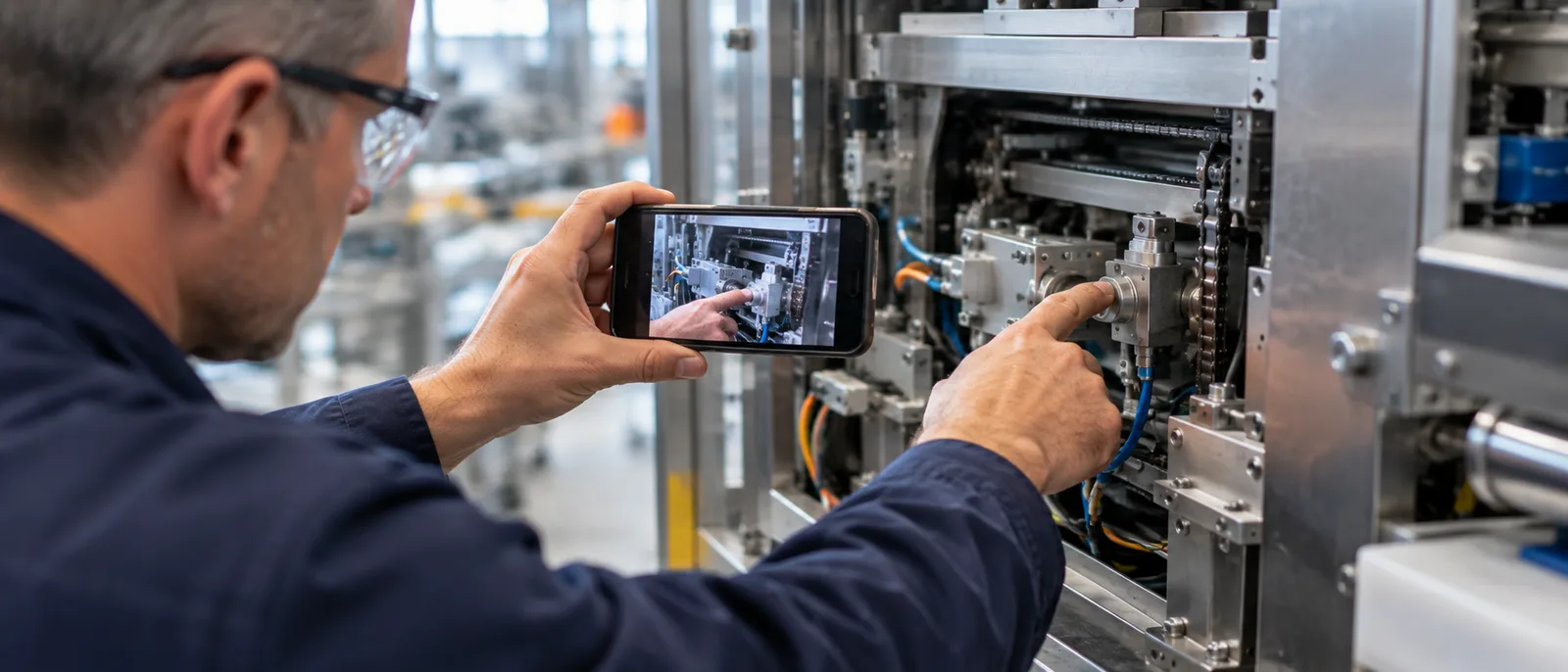
Filming a repair is one of the cheapest ways to keep knowledge in the business. Done badly, it produces a folder of shaky clips nobody ever watches. Done well, it gives the next engineer, or the night shift, the fix in two minutes.
Before you film
- Pick the right jobs. Repeat faults, awkward adjustments, changeovers and anything only one person usually does.
- Use a phone. Landscape, steady, good light. A cheap clip-on light helps inside cabinets.
- Check safety first. Never film in a way that delays isolation or lock-out. Don't film anything that puts the person at risk to get the shot.
While you film
- Say what the problem is. "Line 3 labeller, trips on start-up, fault code E14."
- Show the symptom before you touch anything.
- Talk through it. What you're checking, in what order, and why. The reasoning is the valuable part.
- Show the close-ups. Part numbers, settings, torque values, the exact position of a sensor.
- Say what you'd avoid. The mistake a newcomer would probably make.
- Finish with the result. Show the machine running and say what was actually wrong.
Aim for two to five minutes. If it needs longer, split it into separate clips.
After you film
- Name it properly: machine, then symptom, for example "Line 3 labeller: trip on start-up (E14)".
- Link it to the machine and the manual page it relates to.
- Add two lines of text summarising the cause and fix, so it can be found by search as well as by watching.
- Get it reviewed. A senior engineer should watch it before it is relied on. The person who did the repair isn't always right about why it worked.
Common mistakes
- Silent clips. Without the explanation, a video shows what happened but not why.
- Filming everything. A few good clips beat a hundred poor ones.
- Storing videos on one person's phone.
- Never checking whether anyone can find them.
Where this fits with Machine Mesh
With Machine Mesh, an engineer uploads the clip from the app. Machine Mesh transcribes the spoken explanation and links it to the equipment, so the next engineer who asks about that fault gets it alongside the manual, with the original clip to check against. We still recommend a senior engineer reviews a new fix before the team relies on it.